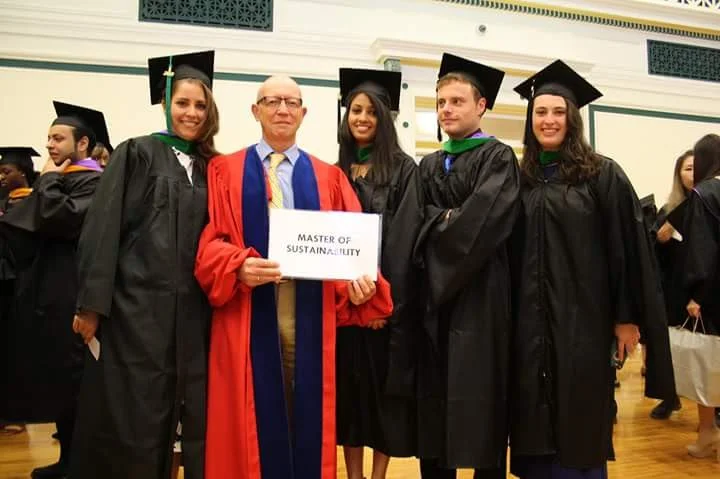
In our fourth“Where are they now?” post, we hear from Komal Kooduvalli, an alumna from Bangalore, India who completed her MS in Sustainability at Chatham in 2016. Komal has accomplished feats in the field of Sustainability, developing her expertise as she moved from Eden Hall to the Rochester Institute of Technology. Now pursuing her Ph.D with the goal of helping to create sustainable supply chains, Komal shares her advice and knowledge with Chatham students.
Can you tell us a bit about yourself?

Komal Kooduvalli
Chatham University MSUS ‘16
My name is Komal Kooduvalli and I am currently pursuing my Ph.D. in Sustainability at the Rochester Institute of Technology while also working as a graduate research intern at the Oak Ridge National Laboratory in Knoxville, TN. I am from Bangalore, India and grew up having the unique experience of being raised in both India and the US, which helped me shape a deep appreciation for the richness and differences of both cultures. I love playing team sports, am a huge foodie, enjoy exploring new places, and thrive on new experiences. I can certainly cook up a mean chai but mostly prefer coffee since I come from the State of Karnataka which produces and exports most of India’s coffee (more on that later).
How have you progressed professionally and/or academically since graduating from the Chatham MSUS program?
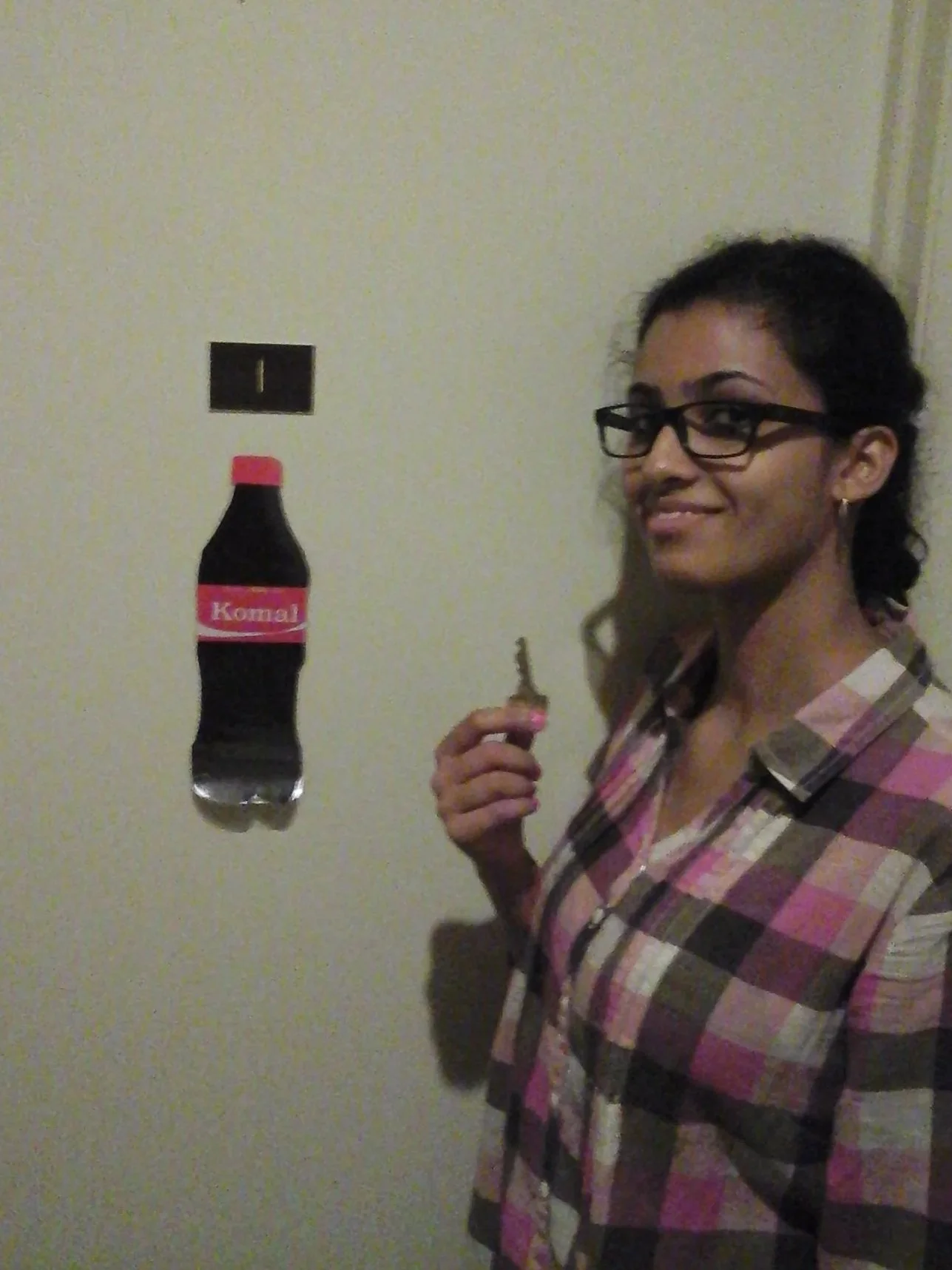
Komal in front of her first Fickes apartment
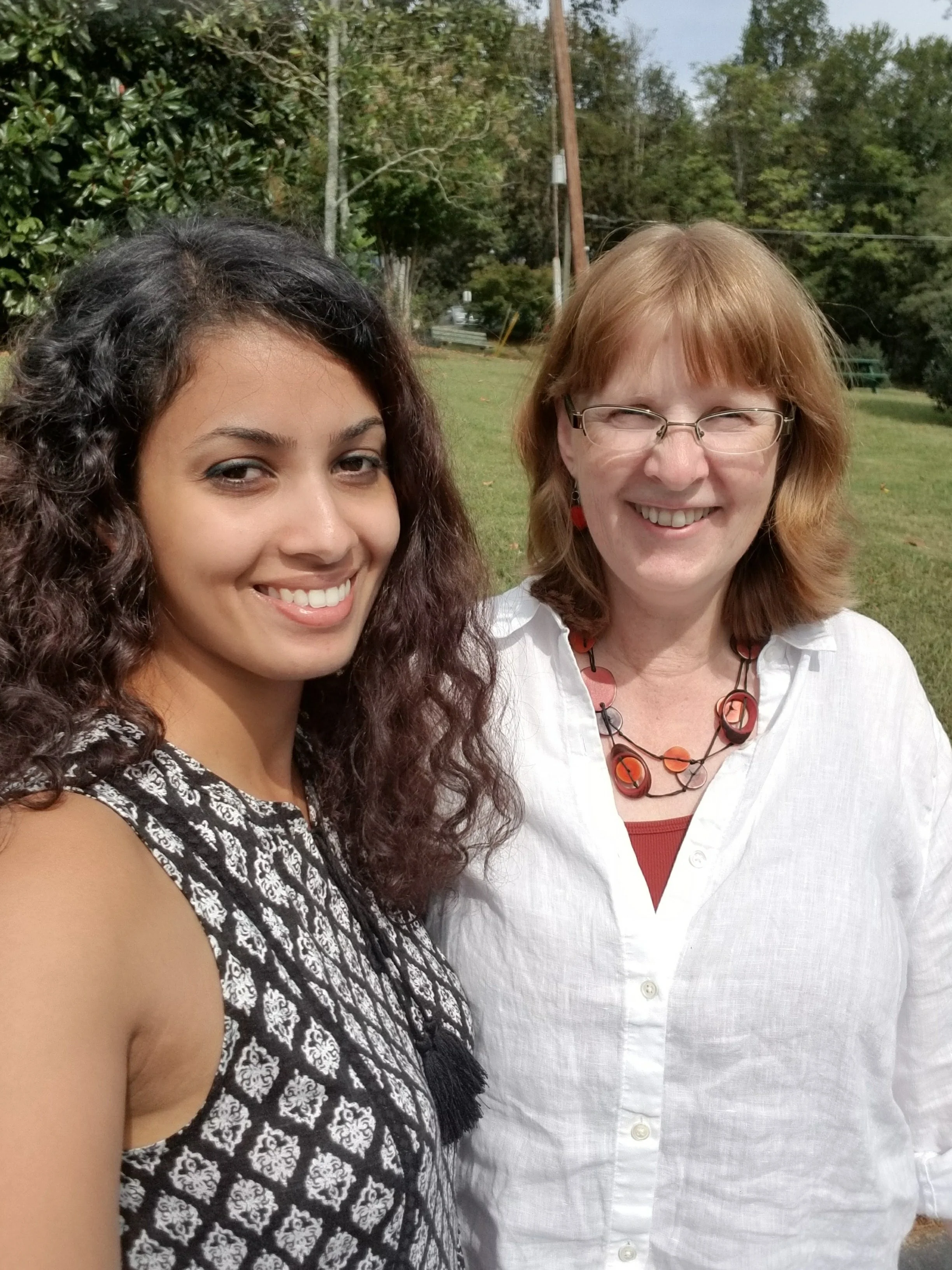
Komal and Dr. Mary Whitney
After graduating from the Falk School of Sustainability at Chatham University with a Master of Sustainability (MSUS) degree in 2016, I moved to Tennessee and worked jointly at the Oak Ridge National Laboratory and the University of Tennessee, Knoxville as a researcher. After a few years, the thirst for knowledge drew me back to school and I decided to go back for my PhD and moved to Rochester, NY. I have learned that life can be circular sometimes and certain situations led me back to Knoxville where I now find myself once again working at the Oak Ridge National Laboratory, but as an intern this time, while completing my PhD journey. Here, I have had the pleasure of connecting with world-class scientists and working with several industry partners, at a place that has state-of-the-art cutting-edge equipment (and also the world’s -now #2 as of last year- largest supercomputer!).
My time at Chatham was instrumental in shaping the way I approach and think critically about sustainability issues. It also gave me tangible skills that were taught by professors who were both knowledgeable and active sustainability practitioners in various sectors like consulting, NGO, academia, and industry. In just two years, I was able to bring these skills to the workplace alongside a great portfolio of projects. I do have to take this opportunity to thank my incredible Master’s advisor Dr. Mary Whitney, whose kindness, support, and generosity has been unmet to this day. I consider her my academic mother and am fortunate to still have a close relationship with her to this day. On top of being a powerhouse of knowledge (I personally like to commend her as a walking encyclopedia), she has shown me that empathy is the true key to academic success and that good advising goes beyond simply guiding students to the right answers.
What is a challenge you overcame to get to where you are now?
There have been several uphill battles while navigating the space of academia with the added layer of living in a country that seems to be changing in ways we did not previously anticipate. If I have to pick just one, the biggest lesson I most often have to remind myself of even now at times, is not to compare myself to others, whether professionally or personally. As time passes, it is very common in programs such as these that are dependent on hyper-specialization, to witness classmates from the same cohort (and eventually some who came after) graduate before you. In parallel, it is also common to feel behind or stunted in life as others get promotions at their work, get married, have families, buy houses, whereas we are still living a very budgeted student-life. It becomes important during these times to take a step back to see the big picture and realize what a blessing it is to be working towards a goal we have invested in for years and that everyone is on their own timeline, with no two being the same.
Looking back, my failures have always taught me something about myself and I am grateful for the lessons and growth they brought with them. I am now also choosing to reframe my perspective to realize that I have been given another unique opportunity at not just a second, but a third chance at returning to school to learn things differently. There is also the benefit of coming back after working for a period of time, which helps add real-world experiences in the classroom and to new skills I am developing.
Is there a current research project you’re working on?
Yes! In general, my work focuses on using lifecycle assessment and technoeconomic analysis to understand the environmental impacts of various novel products and processes that are developed at the lab, in collaboration with industry partners. Specifically for my dissertation, we are working with the Ford Motor Company and Troy Polymers Inc, where I am investigating the environmental impacts of manufacturing CO2 and bio-derived flexible polyurethane seating foams for the automotive industry. My goal after completing this degree would be to work in a national lab setting such as this or go to industry to assist in creating sustainable supply chains.
Can you teach us something about Indian culture?
Since India is a very vast and diverse country, there is no singular culture, as different regions exhibit their own language, culture, and traditions. However, some common holidays that are celebrated across most states are Ugadi (new year), Sankranti (harvest festival), Gowri & Ganesha, Deepavali (or Diwali, the festival of lights), Dasara (or Navaratri), and Holi (festival of colors). In spite of this diversity, a few key “Indian” characteristics that are common across the whole subcontinent is that it is filled with some of the most hospitable, generous, and resourceful people you can find on the planet.
Here are some random, mostly food related things (of course) that came to mind for this:
‘Chai’ means tea so saying chai tea becomes redundant
There is no such thing as “curry” in our culture. We have several spices that are used for various dishes. “Curry” comes from a colonial umbrella term that has one particular pre-mix of spices
My mother’s masala dōsey (or dosa) is the best in the world and I will fight anyone who says otherwise
In Southern India, we prepare our coffee using a filtering device and so our coffee is commonly called as “filter coffee” and it is similar to the New Orleans (NOLA) style coffee you find at Café du Monde since it also contains chicory and interestingly, both have French influences
Namasté is a common greeting that is used to greet or part from people. In Hinduism and many South Asian religions, the belief is that there is a piece of God in everyone so we recognize and bow down to the divinity within each person when doing so with hands joined.
What advice do you have for prospective international students or scholars?
My journey to the US began almost twelve years ago. Although I briefly transitioned to the workforce, my trajectory eventually led me back to being an international student so my advice in this case remains somewhat relevant. The one thing that has stayed constant -then and now- is change. Being an international student means being comfortable in being uncomfortable most of the time, whether it be related to funding, visa situations, or the job market. There is always a degree of unpredictability at every step and the only way to appreciate the adventure is to avoid overthinking about the future and instead, stay grounded in the present and appreciating every moment.
For new students of course, there is the very obvious culture shock that comes with a new society, foods, language, and mannerisms but it is important to remember that this is exceedingly exciting and truly an honor to travel and live abroad in a country that is not like your own because this is when the world feels smaller and more connected. When we engage with diverse people, we are allowed to understand why they may think and do things differently from us. Being open to new perspectives, even if it is not the same as what we grew up with and being okay with a bit of discomfort at times can really go a long way to help us relearn and unlearn certain things. These things can only happen in true melting pots like the US and I feel like it has been successful in helping broaden my horizon and in making me a better researcher.